

Why Industrial Companies Are Still Sending Sales Emails From Outlook And What It's Costing Them
Lead Generation Emailing System for Small & Medium Businesses
The Morning Ritual That Is Leaving Money on the Table
Why Email Is Still the Highest-ROI Channel for SMBs
What Is Actually Wrong With Gmail and Outlook for B2B Sales Outreach
Why Personal Inboxes Hit a Hard Ceiling
The Three Problems Personal Inboxes Cannot Solve
What a Real Email Lead Generation System Looks Like
The Email System Architecture: From SMTP to Pipeline
How Does the Three-Channel Email System Work for B2B?
Channel 1: Cold Outreach via SMTP and CRM
Channel 2: Newsletter Lead Generation
Channel 3: Transactional and Client Email
How Does the Email System Connect to Your Sales Pipeline?
What Email Analytics Should You Track and Why?
Lead Generation Emailing System for Small & Medium Businesses
The Morning Ritual That Is Leaving Money on the Table
A founder of a self-made CNC shop sits down at his desk as every other morning, the glow of the early morning sun barely piercing through the window. He is about to get started on his daily hardest ritual, sending out a batch of sales messages on LinkedIn and emails via Outlook to 20 potential clients… Click. Sent.
And then… silence. No tracking, no automated follow-ups, no systematic execution, just pure cadence. This is not a throwback scene from a decade ago. It is the current reality for many industrial SMBs, small & medium businesses, who are unaware of the power that lies beyond the traditional inbox.
He checks Outlook again at noon. Nothing. He will try to remember to follow up manually next week, if the project meetings and deadlines does not bury him first. One of the twenty prospects was actually interested. He found out late.
Why Email Is Still the Highest-ROI Channel for SMBs
Before we talk about infrastructure, let us be clear on something. Email is not dying. It is being misused.
Most of the B2B deals are initiated via email, not over phone calls, LinkedIn messages, or paid ads as email is their preferred first contact channel. That is not a marginal preference, it is a dominant one across every industrial sector. And the problem is not the channel. It is the absence of a system behind it.
One successful email-started deal that lands a contract for dosing equipment or yogurt lids could be worth $20,000 to $500,000. If that sequence cost you $2,000 for end-to-end management to bring you interested contacts, your ROI can be technically 10:1 to 250:1 in contract value.
You do not need a high reply rate. You need a consistent email lead generation system that generates reliably new and repeating deals, without the founder manually grinding it out every morning.
What Is Actually Wrong With Gmail and Outlook for B2B Sales Outreach
Why Personal Inboxes Hit a Hard Ceiling
Gmail and Outlook are built for communication. They are not built for systematic lead generation. The difference matters more than most founders realise.
When you send a sales email from Outlook, you get no data. You do not know if the prospect opened it, how many times, or whether they forwarded it to a decision-maker. You have no trigger to follow up automatically if they do not reply. You have no record of the interaction linked to a pipeline stage.
If you are sending 20 emails per day manually, that is your ceiling. Anything more becomes unmanageable without a system. For a business where one deal can fund three months of operations, that ceiling is a serious growth constraint.
The Three Problems Personal Inboxes Cannot Solve
No visibility. You do not know who is interested until they reply. By then, you have already lost the prospects who opened your email three times but never responded, those are warm leads you never followed up with because you did not know they existed.
No automation. Every follow-up is manual. That means it depends entirely on the founder’s memory and available time. In practice, most prospects receive exactly one email and then hear nothing.
No pipeline connection. Your email history lives in Outlook. Your pipeline lives in a spreadsheet. These two systems never talk to each other. You cannot see at a glance how many active conversations you have, which ones went cold, or what the next action is on each prospect.
What a Real Email Lead Generation System Looks Like
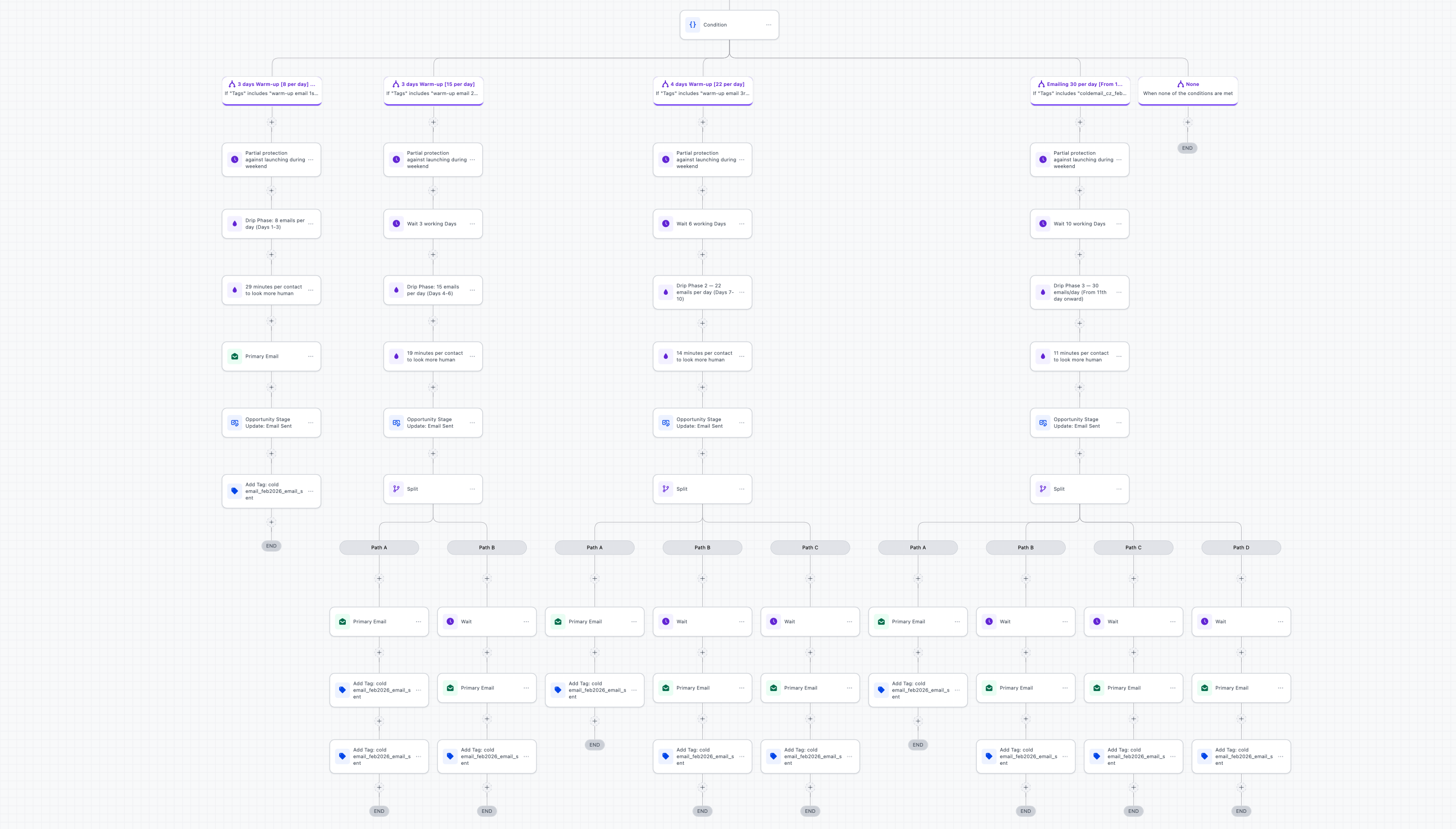
The Email System Architecture: From SMTP to Pipeline
An email lead generation system is not a single tool. It is an architecture, a set of connected components that work together without daily manual input. Here is what it consists of when Diamond Hands builds it for an industrial SMB inside our software.
SMTP connection to your business domain.
Instead of sending from a shared Gmail server, your emails go out from your own domain via SMTP, Simple Mail Transfer Protocol. This means the sending infrastructure is yours. It protects your sender reputation, keeps deliverability healthy, and ensures your emails land in the inbox rather than the spam folder.
Contact database with segmentation.
Every prospect lives in the CRM with full context, company name, role, industry, location, previous interactions. Outreach is segmented by type. A food production company owner gets a different sequence than a engineering e-shop owner. Relevance at the contact level is what separates a 3% reply rate from an 8% reply rate.
Automated multi-step sequences.
You write the emails once. The system handles the rest. Any future adaptation is easy from now on. And A/B testing is starting to sound like something that can actually happen. The standard Diamond Hands outreach cadence runs email with two follow-ups and on Out-of-Office (OOO) alternative branch.
It’s important to have the automation set correctly. There is nothing more embarrassing than hitting a prospect with an automated ‘just checking in’ email when you’re already mid-negotiation. Ensuring your sequences auto-terminate after a non-OOO reply is a non-negotiable for maintaining a professional image.
1st email - Introduction
Short, direct, specific. One clear reason you are reaching out to this particular contact. No generic pitch.
2nd email - Value follow-up
A relevant point, a result, or a specific observation about their business or market. Never just checking in.
3rd email - I call this one as Necromancer Follow-Up.
It’s a low-pressure final email that leaves space for a prospect to rise from dead.
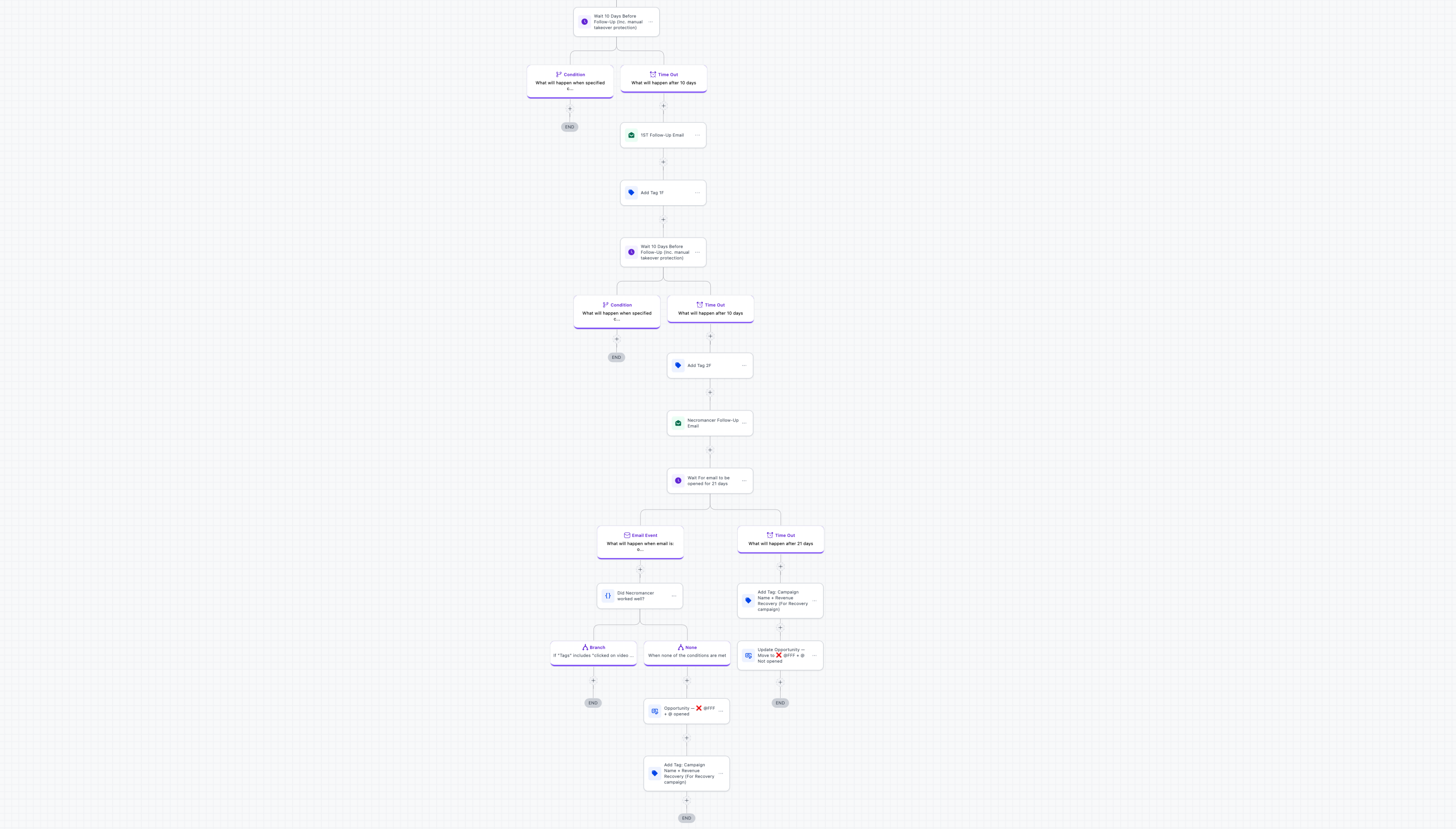
Reply tracking
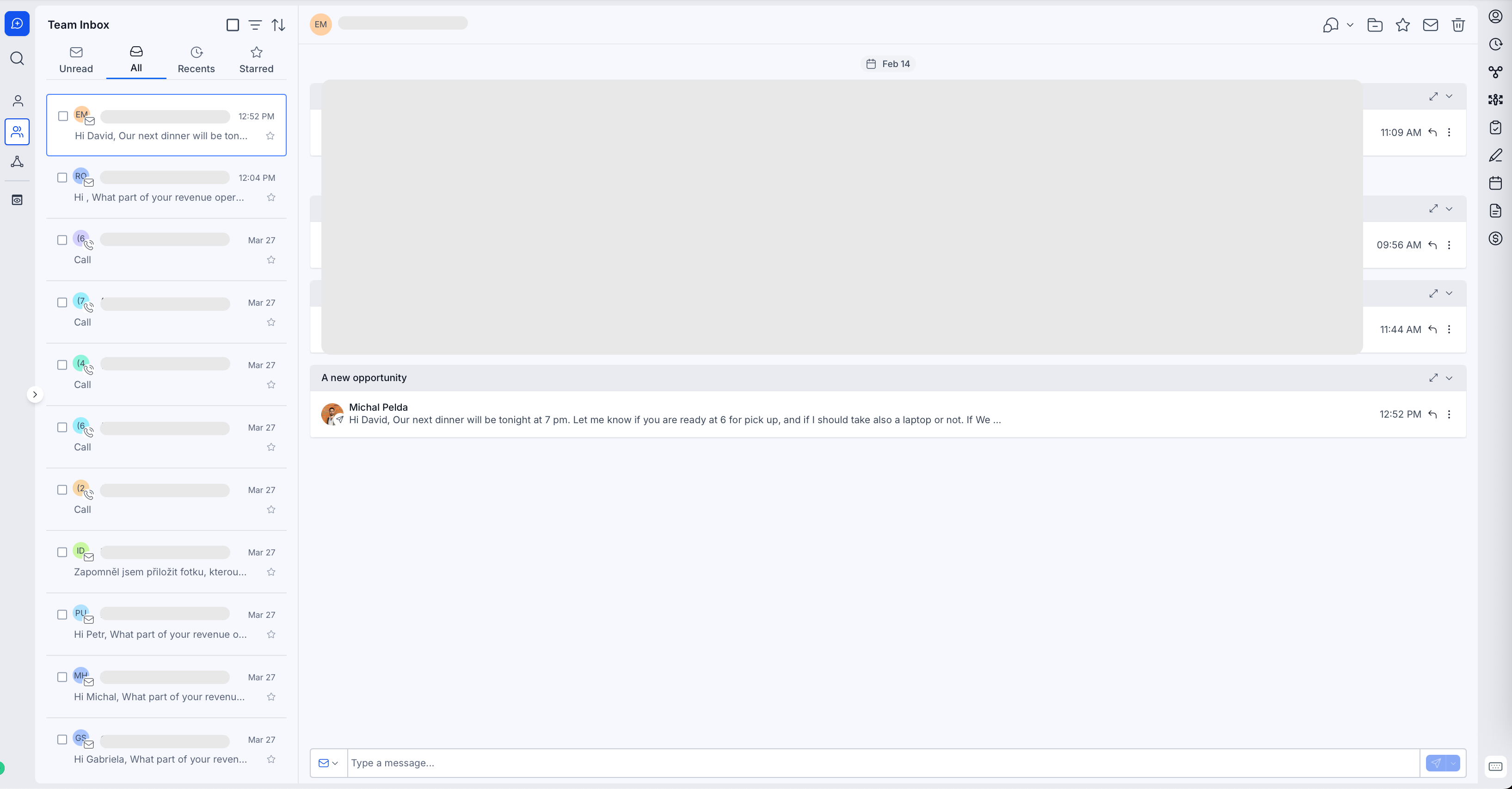
When a prospect replies at any point, the automated sequence stops and their opportunity card moves from Contacted to Replied in the pipeline. You see a status and also you can get a notification if set this way. This is time for sales representative take over. You just got a hot lead.
Full activity log per contact.
Every email sent, opened, clicked, and replied/filled form is logged against the contact record in real time. You can see at a glance who is warm, who is cold, and what the next action is on every prospect in your database.
How Does the Three-Channel Email System Work for B2B?
This is the part most SMB founders have never had explained to them clearly. There are three distinct types of email in a properly built system. They serve different purposes, run on different infrastructure, and must never be mixed.
Channel 1: Cold Outreach via SMTP and CRM
This email is send from your sales sub-domain to your prospects. It is the top of your sales funnel, the first contact with someone who does not know you yet. This channel lives inside our platform, powered by SMTP and accessible from our chat window.
30 new outreach emails per day + automated follow-ups = approximately 90 total email touches per day, fully automated, zero daily founder involvement after setup.
Channel 2: Newsletter Lead Generation
This is a 1-to-many campaign to an opted-in audience, people who have already engaged with your brand in some way. Mostly, this comes to people who signed up to receive newsletters or marketing announcements. Volume can go to 100,000+ emails per one-time sent campaign. This channel runs on a dedicated newsletter sub-domain, completely separate from your cold outreach infrastructure.
The newsletter lead generation channel is your long-game nurture tool. Over time, consistent relevant content keeps this as one of your revenue sources.
Sending a newsletter to tens of thousands of contacts is only half the story. The real challenge is what happens when they start hitting Reply. Most businesses overlook the reply management side of bulk email campaigns, and will end up with missed conversations and lost opportunities. Your CRM needs to be set up for routing replies to specific team members, setting up multiple reply-to addresses, and forwarding rules, so that every response can become a trackable, assignable conversation. For this channel may actually make sense to install a conversational AI chatbot to handle inquiries and bring only relevant messages for a human take over.
Channel 3: Transactional and Client Email
Main email for proposals, project updates, invoices, onboarding for new clients, etc. Runs on your primary business domain, and you have access to it from Outlook or Gmail. Must be kept completely separate from cold outreach to protect your domain reputation with existing clients and partners. Sending low numbers with recipients in the BCC is probably your best productivity tool. Once you need outreach campaigns and a newsletter for more than dozens of people, you reach a cap on this channel.
Mixing cold outreach with newsletter sending on the same domain is one of the fastest ways to destroy deliverability for all channels simultaneously.
How Does the Email System Connect to Your Sales Pipeline?
An email system that does not talk to your pipeline is just a sending tool. The difference between a sending tool and a revenue engine is pipeline integration. Here is how it works inside our platform:
Contact enters the CRM from a CSV list, a website form, or a referral. Assigned to an email sequence based on their segment.
Sequence runs automatically from Monday to Friday. Sent, tracked, logged.
After reply or opt-in is detected, contacts moves automatically from Contacted to Replied or Engaged pipeline stage. Founder/Rep is notified via email/SMS/in-app.
Conversations are managed manually. From the first signal, you take over. Every subsequent email, call, and meeting note is logged against the same CRM profile.
Deal progressed through pipeline stages based on the sales process. Every stage change is timestamped and visible on the monitoring dashboard.
Contacts who did not convert but at least opened the email or even a website move to the revenue recovery list automatically. They stay half-warm for the next outreach cycle.
This is a closed-loop system. Every email touch, regardless of outcome, contributes to a contact profile that gets more valuable over time. You have real data, not just gut feeling, on which email body, subject line, and segment perform.
Businesses using automated lead nurturing generate significantly more sales-ready leads compared to those relying on manual outreach, at a fraction of the cost per lead.
What Email Analytics Should You Track and Why?
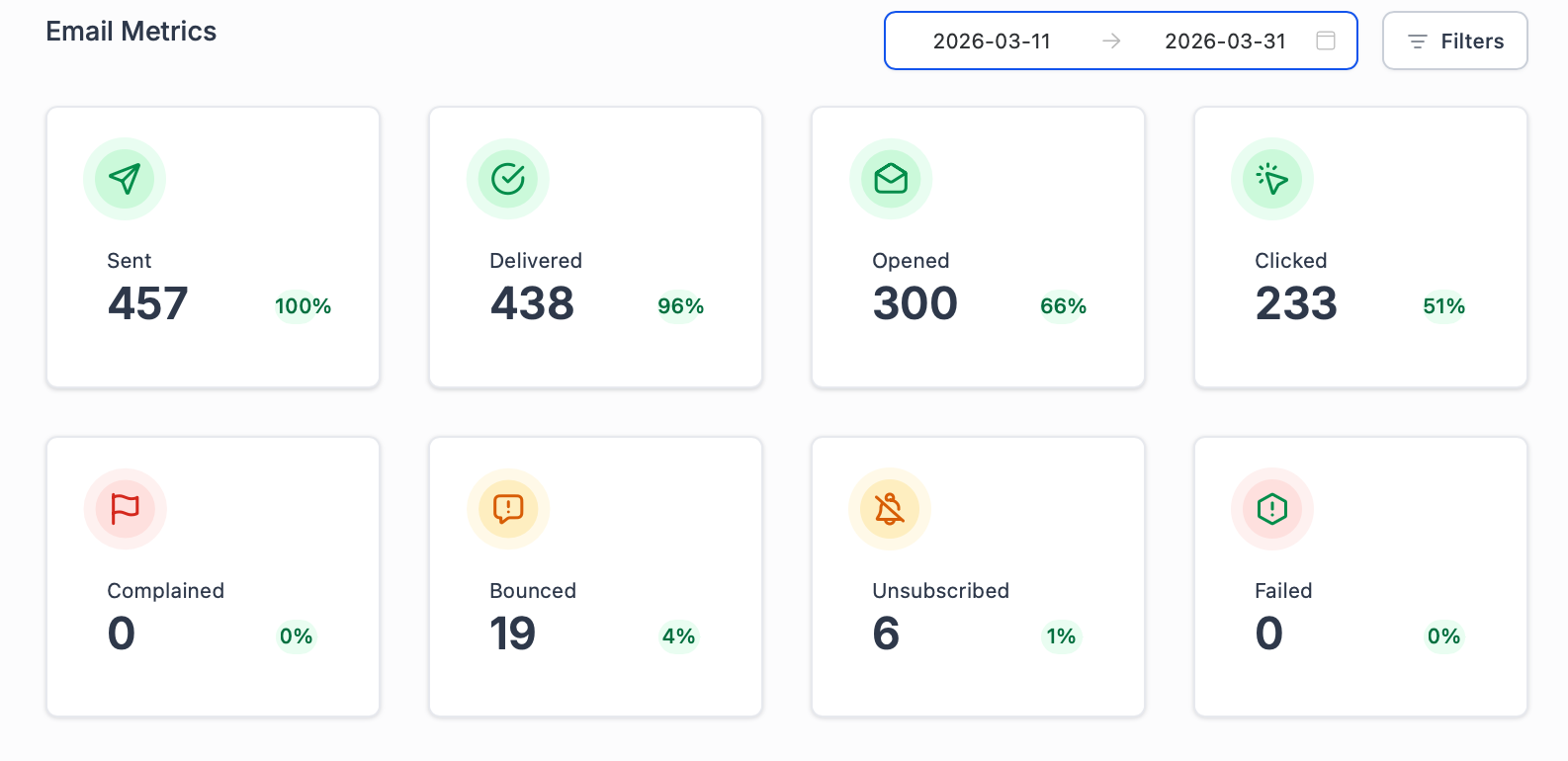
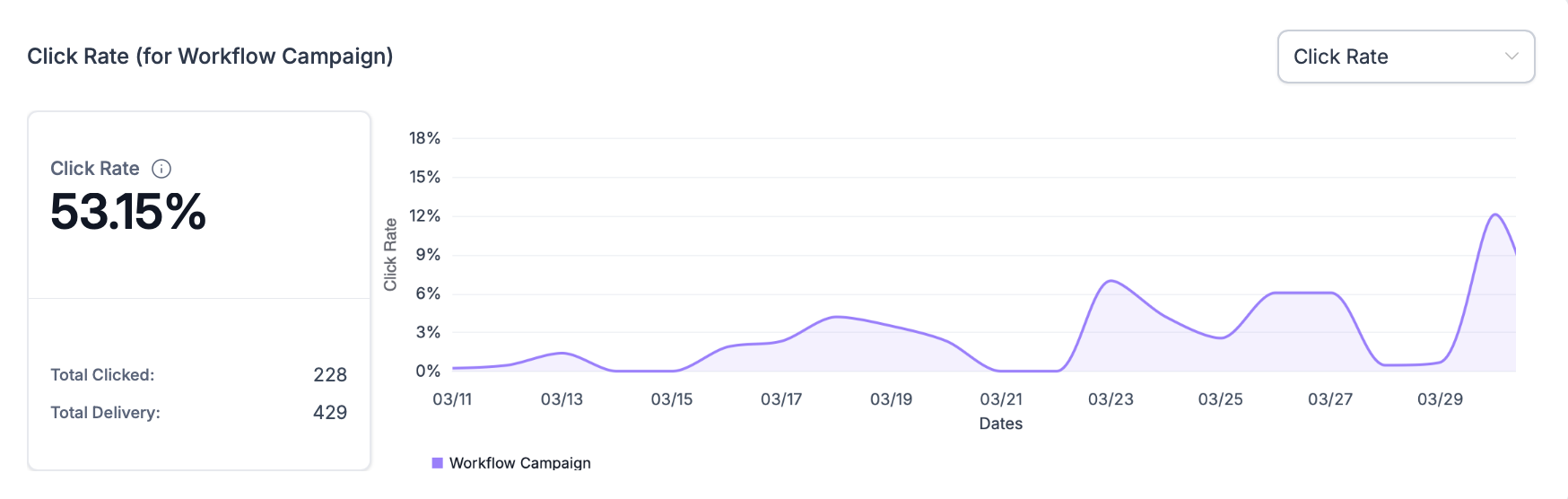
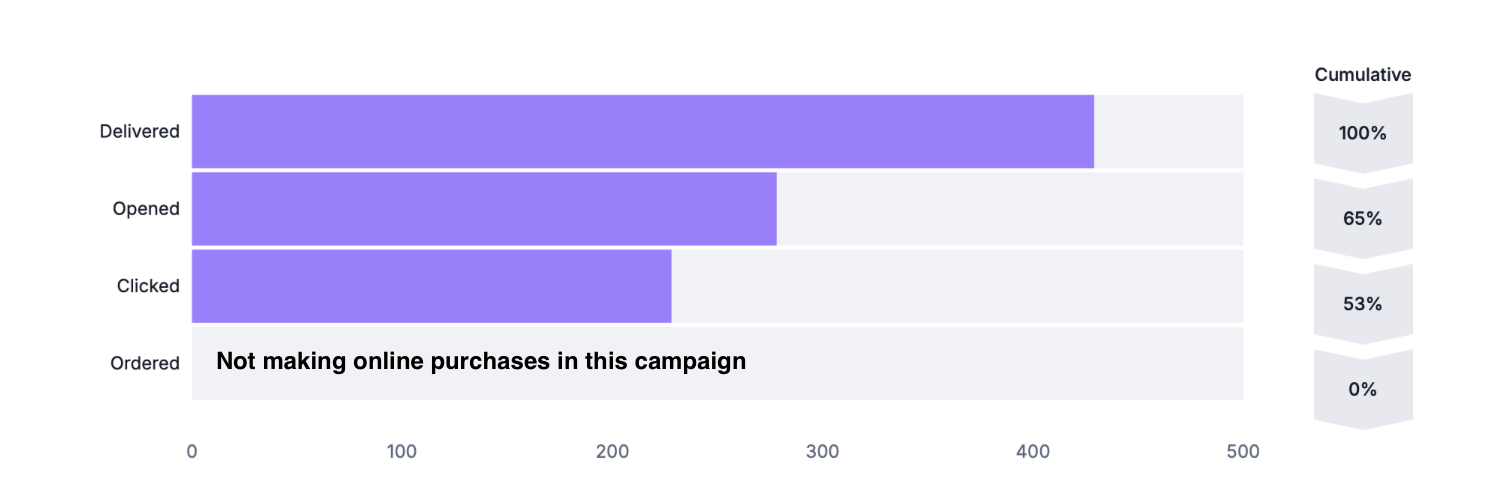
Most SMB founders describe the same experience the first time they see email analytics inside emailing platform: I had no idea this data existed. Here is what the dashboard shows and why each metric matters for your email sales pipeline.
Open rate - Industry average for cold B2B outreach sits around 27%. Below 20% means the problem is your subject line or list quality, not your copy. Above 35% means your targeting and subject lines are strong.
Reply rate - This is the metric that drives pipeline. For industrial B2B with a well-targeted list and a 3-step sequence, 4 - 8% reply rate is a realistic and strong starting benchmark in the first 90 days.
Sequence completion rate - What percentage of contacts go through all follow-ups without replying? High completion with low reply rate means your targeting, message, or products is off, you are reaching people who genuinely do not care. Fix the sales.
Pipeline conversion rate - Of everyone who replied, what percentage moved to a qualified conversation? This tells you the quality of your list, sales strategy and the relevance of your outreach angle. Low conversion with decent reply rates usually means you are reaching the right job titles at the wrong companies.
Newsletter engagement - Open rates for opted-in newsletter audiences should sit between 20 - 50% for a well-maintained, segmented list. Below 20% means your content is not relevant enough, or your list has gone stale and needs a re-engagement campaign before the next send.
Is Your Current Email Setup Costing You Leads?
Easy Self-Assessment:
Answer honestly. These five questions reveal whether you have a system or just a habit.
Do you know how many of your outreach emails were opened in the last 30 days?
Do prospects receive a timely follow-up if they do not reply to your first email?
Is every email interaction visible inside your sales pipeline and contact profile?
Are you sending conversational emails, cold emails, and form automated emails from different domains?
Do you have a separate nurturing/newsletter channel for contacts who either did not convert from outreach or can be converted again?
If you answered NO to two or more, you do not have an email lead generation system. You have an email habit. And every week it runs without a system is a week of qualified leads you cannot get or recover.
The good news is that this is entirely fixable, faster than most founders expect. The infrastructure exists. The sequences can be built in days. The analytics are live the moment the first email goes out.
Ready to improve?
Free 20-minute conversation with Diamond Hands founder Ing. Michal Pelda.
No pitch, no generic deck, a real check of your specific setup and you leave with a clear picture of what your system could be doing.


